
Helping at home is a great way for children to become kind, responsible, and caring. Many parents wonder how can child help their parents at home without being given difficult responsibilities. The good news is that children do not need to do big jobs.
Even small daily efforts can make family life easier while teaching important life skills. In this blog, you will discover simple and practical ways children can help at home and build good habits for the future.
Simple Ways Children Can Help at Home
Keep Personal Belongings Organized
Learning to keep personal belongings neat is one of the easiest responsibilities for any child. Putting books back on the shelf, folding blankets, arranging school supplies, and keeping toys in one place can make a big difference. A clean space also helps children feel more relaxed and ready for the day.
Children may make their beds in the morning, place their used clothes in the laundry basket, and prepare their bags for school in the evening. This will help parents save time and raise responsible kids.
Help with Simple Household Chores
Children do not need to handle difficult work to be helpful. Small household chores are enough to make them feel involved and teach them the value of teamwork. When everyone helps a little, daily work becomes easier for the whole family.
Furthermore, children can help by doing simple tasks like:
- Setting the dining table before meals.
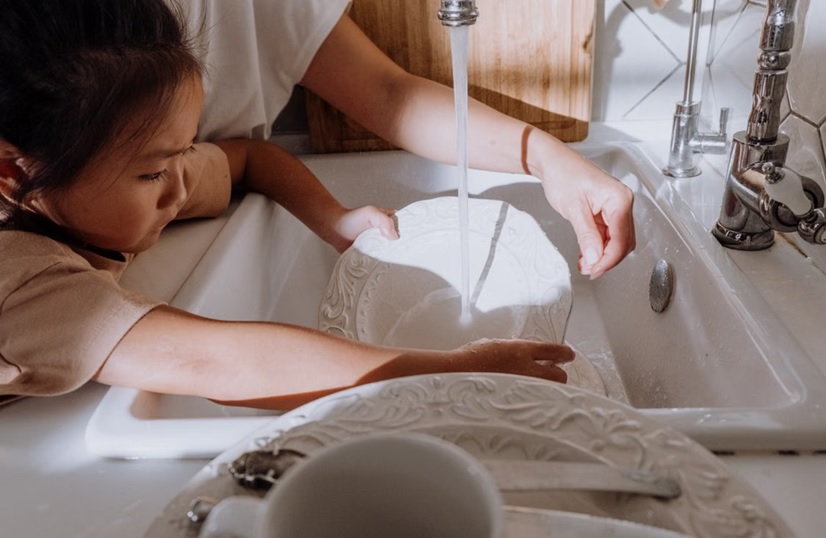
- Clearing plates after eating.
- Folding small towels or clothes.
- Watering plants.
- Putting groceries in the right place.
- Dusting easy-to-reach furniture.
These chores may look small, but they teach responsibility, patience, and the importance of helping others.
Assist in the Kitchen Safely
The kitchen is another great place where children can learn useful life skills. Safe and simple activities can help them understand how meals are prepared and how much effort goes into cooking every day.
For example, young kids can wash fruits and vegetables, chop ingredients, and help pack lunch boxes. However, older kids can learn to cook with an adult’s help. This may involve mixing the ingredients or measuring the flour.
Care for Younger Siblings and Pets
Looking after younger brothers, sisters, or family pets helps children learn to be kind and caring. It also teaches them patience and kindness.
Children can spend time with younger siblings by playing with them, reading a story, or helping with homework. They can also feed a pet, fill its water bowl, or brush its fur, with an adult’s help. Taking care of others in these small ways helps children learn love, care, and responsibility.
Follow Daily Routines Responsibly
A simple daily routine helps children become more independent. When they follow regular habits, everyday life becomes easier for both children and parents.
Consequently, children can try to:
- Wake up on time.
- Get ready for school without constant reminders.
- Do homework before playing.
- Pack their schoolbag each evening.
- Return things when they have finished using them.
- Have clothes ready for the next day.
Following these habits every day helps children learn time management and reduces stress at home.
Show Kindness and Respect at Home
Helping parents is not only about doing chores. Being kind, respectful, and thoughtful is just as important. Good behavior helps create a happy and peaceful home.
In the same way, children may also listen attentively while their parents talk, use polite language, and be thankful for their parents’ efforts. They could also speak kindly, be helpful without being told, and respect family members. Such little things could really help make home more enjoyable.
Conclusion
Helping at home is about much more than finishing daily chores. Every small responsibility teaches children valuable lessons that stay with them for life. They slowly become more confident, responsible, and independent while learning how to work with others.
Furthermore, understanding how can child help their parents at home helps children realize that every family member has an important role. Even the smallest act of help can make parents feel supported and appreciated. Over time, these simple habits build strong values, better relationships, and life skills that continue to be useful as children grow into responsible adults.