

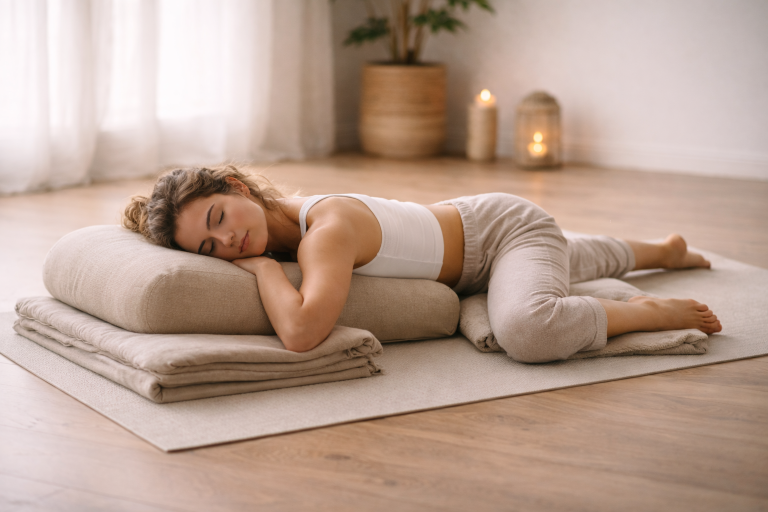
Modern daily life places continuous demands on the human nervous system. Between workplace responsibilities, digital connectivity, and personal obligations, many individuals find themselves operating in a state of chronic high alert. When this state persists over months or years, the body depletes its internal reserves, leading to profound, long-term fatigue that standard sleep cannot fix. While active exercise styles serve to build muscle and cardiovascular endurance, they require an expenditure of energy that an exhausted system simply cannot afford. Restorative yoga offers a specialized approach to physical and mental cultivation, focusing entirely on systematic energy conservation and physiological repair.
The Science of Restorative Recovery
To understand how passive relaxation rebuilds baseline energy levels, one must look at the autonomic nervous system. This system is divided into two primary branches: the sympathetic nervous system and the parasympathetic nervous system.
The sympathetic branch drives the fight-or-flight response. When active, it elevates heart rate, increases blood pressure, redirects blood flow toward large skeletal muscles, and floods the bloodstream with stress hormones like cortisol and adrenaline. This response is highly adaptive for short-term emergencies, but modern life triggers it continuously. Running on sympathetic dominance drains metabolic energy, compromises immune function, and disrupts digestion and cellular repair.
The parasympathetic branch governs the rest-and-digest response. When the body enters this state, the heart rate slows down, blood pressure normalizes, and internal resources shift toward tissue repair, waste elimination, immune defense, and endocrine stabilization. Restorative yoga is systematically designed to stimulate parasympathetic dominance. By placing the physical frame in highly comfortable, gravity-assisted shapes for extended durations, the mind perceives a state of absolute safety. This safety signals the brain to lower stress hormone production, allowing the body to redirect its resources toward rebuilding depleted cellular energy stores.
Key Principles of the Restorative Approach
Executing a restorative yoga practice effectively requires a shift in mindset from achievement to allowance. To ensure the body truly enters a recovery state, practitioners must adhere to several core principles:
-
Complete Physical Support: The body should never struggle to hold a shape. Yoga blocks, bolsters, blankets, and straps are positioned to fill the space between the body and the floor. This eliminates the need for muscular contraction, allowing the skeletal system to rest fully.
-
Extended Hold Times: While active yoga postures are typically held for five to ten breaths, restorative shapes are maintained for anywhere from ten to twenty minutes. It takes several minutes for the muscular system to realize it is safe to let go, and several more minutes for the nervous system to transition into parasympathetic dominance.
-
Warmth Maintenance: As the body settles into stillness and the heart rate slows down, core body temperature drops. Cold environments stimulate muscular bracing and sympathetic alertness. Using heavy blankets over the body keeps the core warm, ensuring deeper physical softening.
-
Sensory Deprivation: Reducing external stimuli accelerates internal quiet. Dimming the room lights, closing the eyes, or using weighted eye pillows minimizes visual input, allowing the brain waves to slow from active beta patterns to deeply relaxing alpha and theta patterns.
Essential Restorative Postures for Recharging
The following postures form the foundation of a recovery-focused practice. They target major areas of tension in the body, such as the hips, spine, chest, and shoulders, while creating the physical conditions necessary for deep rest.
Supported Child Pose
This posture provides a profound sense of containment and security, making it highly effective for mental exhaustion and nervous system overload. It gently stretches the lower back, glutes, and thighs while encouraging deep diaphragmatic breathing into the back of the lungs.
To set up the pose, place a long bolster lengthwise on your mat. Sit on your shins with your knees wide apart on either side of the bolster, keeping your big toes touching. Lower your torso down onto the bolster, turning your head to one side. Allow your arms to rest comfortably on the floor alongside the bolster, keeping your elbows soft and shoulders relaxed. Switch the direction of your head halfway through the hold to ensure an even stretch along the neck. Remain in this shape for ten to fifteen minutes.
Supported Bridge Pose
This shape targets the front line of the body, opening up the chest, diaphragm, and hip flexors. It gently counteracts the hunched posture associated with prolonged computer work and desk sitting, allowing for larger, more efficient oxygen intake.
Begin by lying on your back with your knees bent and feet flat on the floor, spaced hip-width apart. Press into your feet to lift your hips just high enough to slide a firm yoga block or a rolled blanket directly under your sacrum, which is the flat bone at the base of your spine. Lower your weight completely onto the prop. Let your arms rest out to the sides with your palms facing up. Keep your gaze directed straight up at the ceiling to protect your neck. Hold this position for ten minutes, allowing the front of your hips to soften with each exhalation.
Legs-Up-the-Wall Pose
Widely considered the ultimate recovery posture, this shape uses gravity to reverse the blood flow in the lower extremities. It drains pooled fluid from the ankles and feet, reduces the workload on the heart, and soothes an overstimulated brain.
Position a folded blanket or a bolster a few inches away from a clear wall space. Sit sideways against the wall with your hip touching the surface. In a single fluid motion, swing your legs up onto the wall as you lower your torso, shoulders, and head flat onto the floor. Your hips should rest on top of the blanket or bolster, with your sit bones dropping slightly into the gap between the prop and the wall. Let your legs rest passively against the vertical surface. Keep your arms relaxed at your sides or placed lightly on your abdomen. Stay in this inversion for fifteen to twenty minutes.
Supported Bound Angle Pose
This posture opens the inner thighs, groin, and pelvic floor while creating a spacious expansion across the chest and heart center. It is particularly helpful for releasing emotional tension and physical stress held in the hips.
Place a bolster lengthwise behind you, touching the base of your lower back. Sit in front of the bolster and bring the soles of your feet together, allowing your knees to fall open to the sides in a diamond shape. Slide blocks or folded blankets under your outer thighs to completely catch the weight of your legs so there is no pulling sensation in the groin. Lower your spine down onto the bolster, supporting your head with an extra pillow if needed. Let your arms open wide with your palms facing skyward. Rest here for fifteen minutes.
Long-Term Implementation and Integration
Rebuilding long-term energy reserves is not a one-time event; it requires consistent application over time. Incorporating a restorative practice into your regular routine can be structured according to your current energy levels and schedule constraints.
For those experiencing severe fatigue or recovering from long-term burnout, a daily twenty-minute practice featuring a single posture, such as Legs-Up-the-Wall, can provide immediate relief to the nervous system. Alternatively, scheduling a full sixty-minute session once or twice a week allows for a comprehensive reset of all major bodily systems. The ideal time to practice is in the late afternoon or early evening, serving as a buffer between the demands of the day and nighttime sleep, which enhances overall sleep architecture and quality.
Frequently Asked Questions
Can restorative yoga replace night sleep if I am sleep-deprived?
No, restorative yoga cannot replace the vital cognitive clearance and tissue regeneration processes that occur during deep REM and non-REM sleep cycles. However, it does prepare an overstimulated nervous system for higher-quality sleep by lowering cortisol levels before bedtime, making it easier to fall asleep and stay asleep.
What should I do if my mind keeps racing during the quiet postures?
It is completely natural for the mind to remain active when the body stops moving. Instead of fighting your thoughts, redirect your attention to the physical sensations of your breath moving in and out of your body, or focus on the feeling of weight dropping into the props. Mental stillness is a byproduct of physical relaxation, not a prerequisite.
I do not own professional yoga props, so how can I practice at home?
Professional props are helpful but not mandatory for a successful practice. You can easily substitute household items for traditional gear. Use thick bed pillows or couch cushions instead of bolsters, stacks of hardcover books wrapped in towels instead of foam blocks, and heavy bath towels or fleece throws instead of yoga blankets.
Is it normal to feel cold or shiver during a restorative session?
Yes, this is a normal physiological response. As your body transitions out of the sympathetic state and into deep relaxation, your heart rate slows down, your blood pressure drops, and your internal temperature falls. Always keep a thick blanket nearby to cover your body before settling into a posture.
How does this style of yoga differ from Yin yoga?
While both styles utilize long holds and appear passive, they target different layers of the body. Yin yoga focuses on applying a gentle, deliberate stress to deep connective tissues, ligaments, and joints to increase flexibility, often requiring a degree of physical sensation. Restorative yoga focuses on absolute comfort, zero muscular effort, and complete physical support to heal the nervous system.
Can practicing these postures aggravate existing lower back pain?
If a posture is set up incorrectly without enough support, it can strain the lower back. However, when props are placed properly to fill the gaps beneath your body, restorative yoga relieves spinal compression. If you feel any pinching, sharp sensations, or discomfort, immediately alter the props or exit the pose, as the practice should never cause pain.